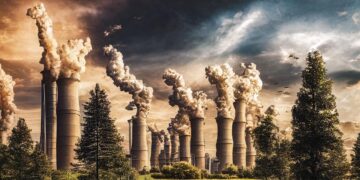
Harvesting Uncertainty: The Impact of Climate Change on Global Agriculture
The advent of climate change is reconfiguring agricultural landscapes globally, introducing new levels of uncertainty into food production, resource availability, and farming practices. Unpredictable weather patterns, increasing temperatures, and shifting climatic zones are not only impacting crop yields but are also forcing adaptations in agricultural planning and management. This article comprehensively explores how climate change is affecting global agriculture and offers insights into the adaptive measures necessary to sustain agricultural productivity.
Understanding the Impact of Climate Change on Crop Production
Climate change affects agriculture in multifaceted ways. Initially, the rise in global temperatures can accelerate the growth rate of certain crops, reducing their growing periods and affecting their yield quality and quantity. For instance, studies have shown that wheat and rice, staples for billions worldwide, exhibit reduced nutritional values and productivity under elevated CO2 levels. Additionally, changes in precipitation patterns result in either detrimental droughts or excessive flooding, each posing severe threats to agricultural reliability and food security.
Moreover, climate change exacerbates the occurrence of extreme weather events such as hurricanes, heatwaves, and heavy rains. These events not only devastate farms and infrastructure but also disrupt market operations and supply chains, thereby inflating commodity prices and affecting global markets.
Global Regions at Risk
The impact of climate change on agriculture is not uniformly distributed. Certain regions experience more adverse effects than others, often correlating with their geographic and economic profiles. Developing countries, particularly those in Sub-Saharan Africa and South Asia, are at significant risk due to their lower adaptive capacities and greater reliance on agricultural livelihoods.
For countries like India, where a large portion of the population depends on monsoon-based agriculture, shifts in monsoon patterns can lead to severe implications for food production and national income. Similarly, in African nations, where infrastructure and technology are less developed, prolonged droughts can quickly lead to food shortages and economic instability.
Adaptive Strategies and Technological Innovations
To counter the destabilizing effects of climate change on agriculture, both policy makers and farmers are turning to adaptive strategies and technological innovations. Improved agricultural practices such as crop rotation, agroforestry, and climate-resilient crop varieties are being promoted to sustain productivity. Furthermore, advancements in technology such as precision agriculture, which includes the use of satellites and sensors for more accurate weather forecasting and field monitoring, significantly enhance decision making and resource management.
Government and international bodies are also playing crucial roles by investing in rural infrastructure improvements, funding research and development for climate-resilient technologies, and implementing policies to support sustainable farming practices and secure food systems.
FAQs on Climate Change and Agriculture
How does climate change affect farming?
Climate change alters weather patterns, exacerbates extreme weather conditions, and shifts climatic zones, all of which pose challenges to stable and predictable agricultural practices.
Which crops are most affected by climate change?
Staple crops such as wheat, rice, and maize are among the most vulnerable, as they are sensitive to changes in temperature and water availability.
What are farmers doing to adapt to climate change?
Farmers are increasingly adopting more resilient crop varieties, altering planting schedules, utilizing better soil management techniques, and incorporating technological advances to combat the negative impacts of climate change.
Is there a link between climate change and food security?
Yes, climate change poses a significant risk to global food security, especially in regions heavily dependent on agriculture that are also experiencing rapid population growth and limited economic development.
Conclusion
The uncertainty brought on by climate change demands robust, innovative, and comprehensive responses to sustain and advance agricultural productivity worldwide. While the challenges are steep, the continuous evolution of adaptive strategies and technologies fosters hope for resilient global food systems. However, ongoing support from governmental and international institutions alongside local adaptation is essential to navigate the complexities of future agricultural demands in the face of an ever-changing climate landscape.
By understanding the intricate ways in which climate change affects agriculture, stakeholders at all levels can better prepare, adapt, and secure the agricultural foundations of society against the unpredictable vagaries of the climate.
References and Further Reading
For further insights into the impacts of climate change on agriculture and the adaptive strategies being employed globally, consider exploring resources available through the Food and Agriculture Organization, the Intergovernmental Panel on Climate Change, and various academic publications focused on climate science and agronomy.